By Carolina Sky Painting · Published November 26, 2026
The short answer
Most commercial building exteriors are repainted every 5 to 10 years, and most commercial interiors every 3 to 7 years, with high-traffic areas such as corridors, lobbies and restrooms needing attention sooner. These are planning ranges, not rules. In Charlotte, sun on south and west walls, humidity and summer storms shorten the cycle, so inspect the building once a year and let the condition of the coating set the date.
- Use the ranges to budget, and use an annual walk of the building to decide.
- South and west elevations usually fail first. Shaded north walls grow mildew first.
- Failed caulk and hairline cracks let water in long before the paint looks bad.
- Washing, caulk repair and a touch-up program push the next full repaint out.
Planning ranges by surface
These ranges are common industry planning figures for budgeting. They are not manufacturer warranties, and a specific building can fall outside them in either direction. The right-hand column is what to look for on a walk of the property.
| Surface | Typical planning range | What tells you it is time |
|---|---|---|
| Stucco and EIFS exteriors | 5 to 10 years | Hairline cracks, chalky residue on your hand, faded color on sun-facing walls |
| Painted brick and block | 7 to 10 years or more | Peeling, white salt deposits, dark damp patches after rain |
| Exterior wood trim and doors | 3 to 7 years | Cracked or peeling paint at joints and edges, exposed bare wood |
| Exterior metal: canopies, railings, doors | 5 to 10 years | Rust at edges and fasteners, rust stains running down the wall |
| Office walls and private suites | 5 to 7 years, or at tenant turnover | Scuffs that no longer clean off, patched areas that show |
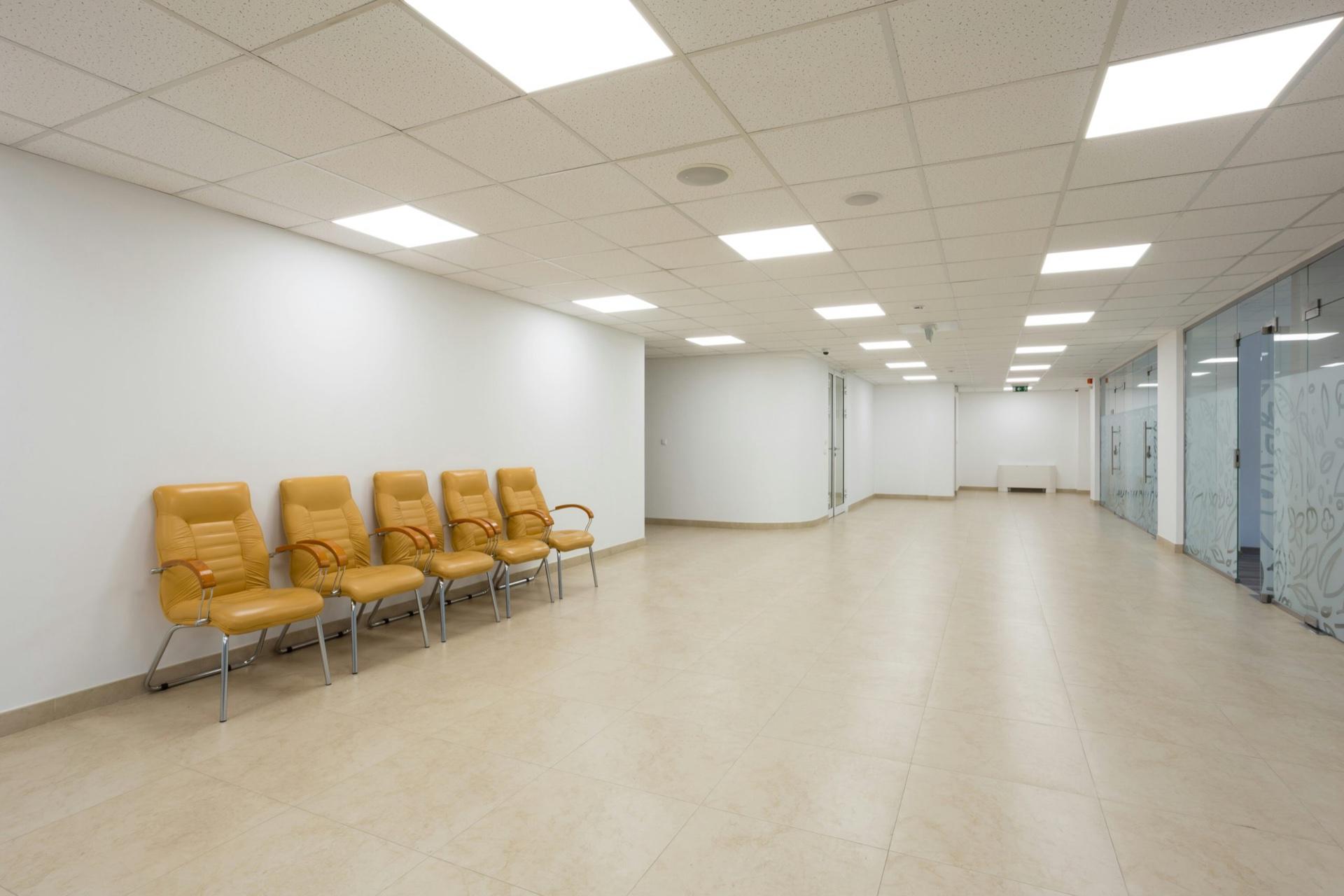
| Corridors, lobbies, restrooms, break rooms | 2 to 4 years | Cart and luggage damage, worn corners, stained areas around fixtures |
| Retail sales floors and restaurant dining rooms | 2 to 5 years, or at a brand refresh | Visible wear at customer height, color no longer matching brand standards |
| Parking deck striping | 1 to 3 years | Lines hard to see at night or in rain, worn arrows and stop bars |
What Charlotte weather does to exterior paint
Charlotte's weather is hard on exterior coatings in a specific way. The National Weather Service's 1991 to 2020 normals for Charlotte show 43.60 inches of precipitation a year and a normal July high of 90.3 degrees. NOAA's state climate summary describes North Carolina as having a humid climate with very warm summers. Heat, moisture and strong sun together work on a coating in different ways.
- Sun: ultraviolet light breaks down the binder in paint. South and west walls fade and chalk first, and dark colors show it soonest.
- Humidity and shade: north walls and areas behind landscaping stay damp, which is where mildew and algae start.
- Rain and storms: water finds failed caulk joints, parapet caps and cracks, then pushes paint off from behind.
- Temperature swings: stucco, wood and metal expand and contract at different rates, which opens joints between them.
This is why two elevations of the same building rarely age at the same speed. It is common to repaint the sun-facing sides of a plaza a few years before the rest, and budgeting by elevation is often cheaper than repainting everything on one date.
Signs a commercial building is due for repainting
- Chalking: a powdery residue comes off on your hand when you rub the wall. The degree of chalking can be measured with a standard test, ASTM D4214. Heavy chalking means the binder in the paint is breaking down.
- Fading that is uneven between elevations, or that no longer matches the brand or the neighboring tenant bays.
- Peeling, blistering or flaking, especially near the ground, at parapets and around windows.
- Cracked or missing caulk at windows, doors, control joints and where two materials meet.
- Hairline cracks in stucco or EIFS.
- Rust on metal, or rust stains running from fasteners, railings and canopies.
- Mildew or algae that returns soon after washing.
- Interior scuffs, stains and patched areas that cleaning and touch-up no longer hide.
Caulk and cracks deserve the most attention. A wall can look acceptable from the parking lot while water is already getting behind the coating. Repair at that stage is a small line item. After the substrate is damaged it becomes the largest one.
How to make a commercial paint job last longer
- Wash the exterior on a schedule. Dirt, pollen and mildew hold moisture against the coating.
- Walk the building once a year and after major storms, and record what you find by elevation.
- Repair caulk joints and small cracks as they appear, without waiting for the full repaint.
- Keep sprinklers and landscaping off the walls.
- Keep labeled touch-up paint and the color schedule from the last job, so touch-ups match.
- On the next repaint, put the money into surface preparation and the right system for each surface. That decides how long the job lasts more than the brand of paint does.
Repaint by condition, and phase the work
For a property manager, the useful output of an inspection is a plan with years on it. Sort the building into three groups: surfaces that are failing now, surfaces that will need work within two to three years, and surfaces that only need washing and touch-up. That turns one large capital request into phases that fit a budget cycle.
Carolina Sky Painting is a commercial painting contractor in Charlotte, NC. We walk the property, price each elevation or area as its own line, and send the proposal within 48 hours, so work can be phased by year without a re-bid. See commercial exterior painting in Charlotte and commercial interior painting in Charlotte for what each covers.
Sources
- ASTM D4214-23: Standard Test Methods for Evaluating the Degree of Chalking of Exterior Paint Films
- National Weather Service: Charlotte daily normals 1991 to 2020, December (annual precipitation)
- National Weather Service: Charlotte daily normals 1991 to 2020, July
- NOAA NCICS: North Carolina State Climate Summary
The ranges in this guide are general planning figures, not guarantees. Product data sheets, the condition of the surface and the exposure of your building govern.