By Carolina Sky Painting · Published November 26, 2026
The short answer
Commercial painting is the painting of buildings where people work, shop, eat and receive care, and its first goal is appearance with as little disruption as possible. Industrial painting is the coating of concrete, steel and equipment, and its first goal is protection from abrasion, chemicals, moisture and corrosion. The difference shows up in the coatings used and in how much surface preparation comes first.
- Commercial painting: offices, retail, restaurants, medical suites, schools. Judged by how it looks and how little it disturbs tenants.
- Industrial painting: floors, steel, parking structures, tanks, equipment. Judged by how long the coating protects the surface.
- Many commercial properties have industrial surfaces in them, such as a parking deck, a loading dock or a mechanical room.
- Ask a contractor which of the two they do day to day, and ask to see finished work of that type.
What commercial painting is
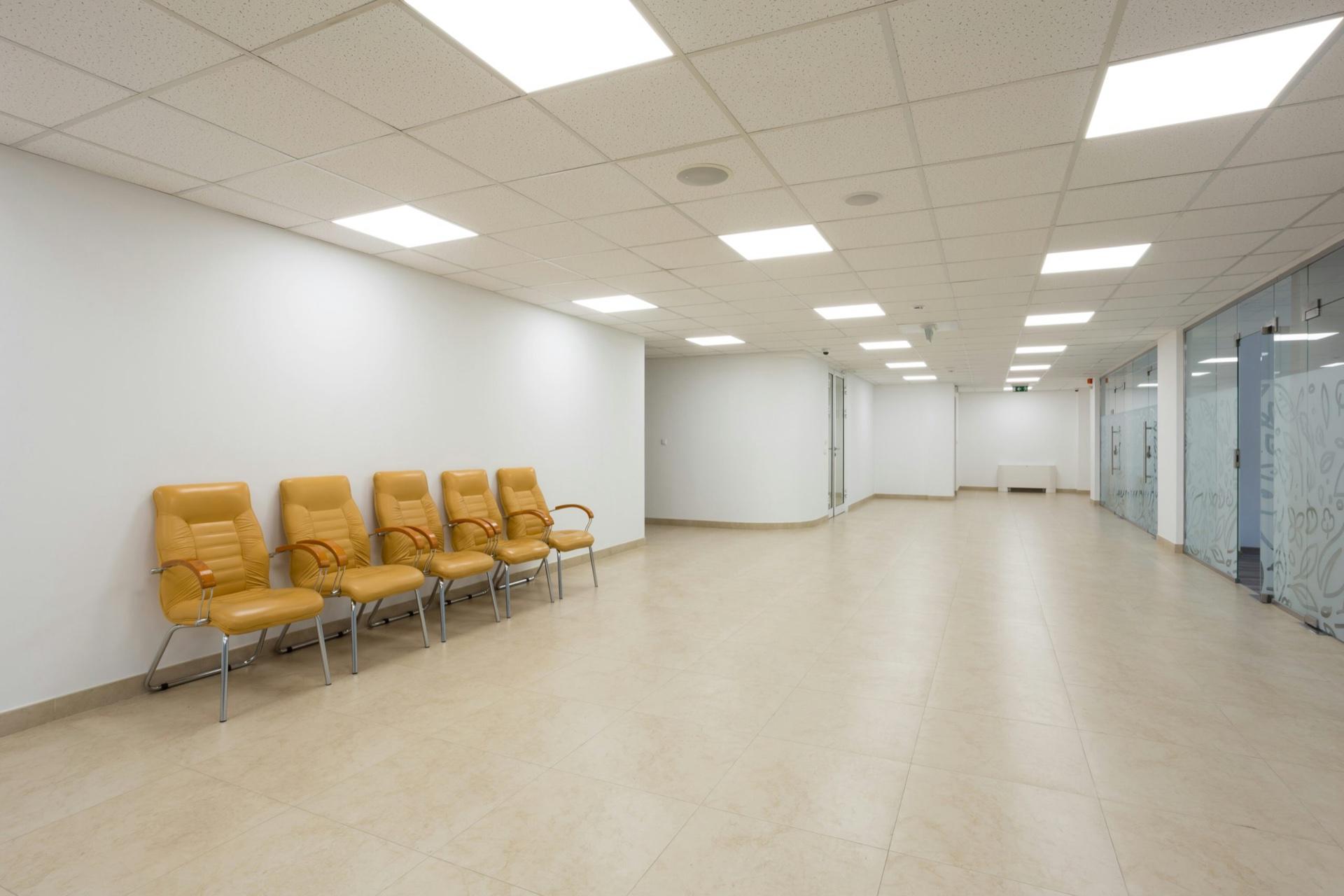
Commercial painting is interior and exterior painting of business properties: offices, retail stores, shopping centers, restaurants, medical and dental suites, schools, churches and multi-tenant buildings. The surfaces are mostly drywall, wood, stucco, EIFS, brick and metal doors and frames.
The work is usually done while the building is in use. That makes scheduling, odor, dust control and daily cleanup as important as the paint itself. Typical products are acrylic wall paints in low-VOC formulas, scuff-resistant coatings for corridors, and elastomeric or acrylic systems for exteriors.
What industrial painting is
Industrial painting is the application of protective coatings to surfaces that take physical or chemical abuse: concrete floors, structural steel, parking decks, tanks, piping, machinery and loading areas. The coating is there to stop wear, corrosion or contamination. Color is secondary.
Typical products are epoxies, polyurethanes, polyaspartics, zinc-rich primers and direct-to-metal coatings. They are applied at a specified thickness, and the surface is prepared mechanically first, by grinding, shot blasting or abrasive blasting.
Commercial and industrial painting compared
| Commercial painting | Industrial painting | |
|---|---|---|
| Main goal | Appearance and a clean, consistent finish | Protection of the surface underneath |
| Typical properties | Offices, retail, restaurants, clinics, schools, multi-tenant buildings | Warehouses, plants, parking structures, utility and mechanical areas |
| Typical surfaces | Drywall, wood, stucco, EIFS, brick, doors and frames | Concrete floors, structural steel, tanks, piping, equipment |
| Typical coatings | Acrylic wall paints, enamels for trim, elastomeric exterior coatings | Epoxy, polyurethane, polyaspartic, zinc-rich and direct-to-metal coatings |
| Surface preparation | Washing, patching, sanding, caulking, spot priming | Grinding, shot blasting or abrasive blasting to a specified profile or cleanliness |
| How it is specified | By area, color, sheen and number of coats | By system, film thickness and preparation standard |
| Biggest scheduling issue | Working around tenants, customers and opening hours | Downtime, cure time and safe return to service |
| How failure shows | Scuffs, fading, peeling at edges, visible touch-ups | Peeling from the slab, rust, chemical damage, worn traffic lanes |
Why surface preparation is the real dividing line
On a commercial wall, preparation is repair and cleaning. On an industrial surface, preparation is a measured condition that the coating depends on. For concrete, the International Concrete Repair Institute's Guideline 310.2R describes ten concrete surface profiles, CSP 1 to CSP 10, and a floor coating's data sheet states which profile it needs. For steel, the AMPP surface preparation standards, formerly published by SSPC and NACE, define levels of cleaning from hand-tool cleaning up to abrasive blasting.
This is why an epoxy floor rolled onto smooth, sealed concrete peels, even when the product was a good one. The coating had nothing to hold on to. If a bid for a floor or for steel does not say how the surface will be prepared, it is missing its most important line.
Where the two overlap in one property
Few buildings are purely one or the other. These are common examples of both in a single property:
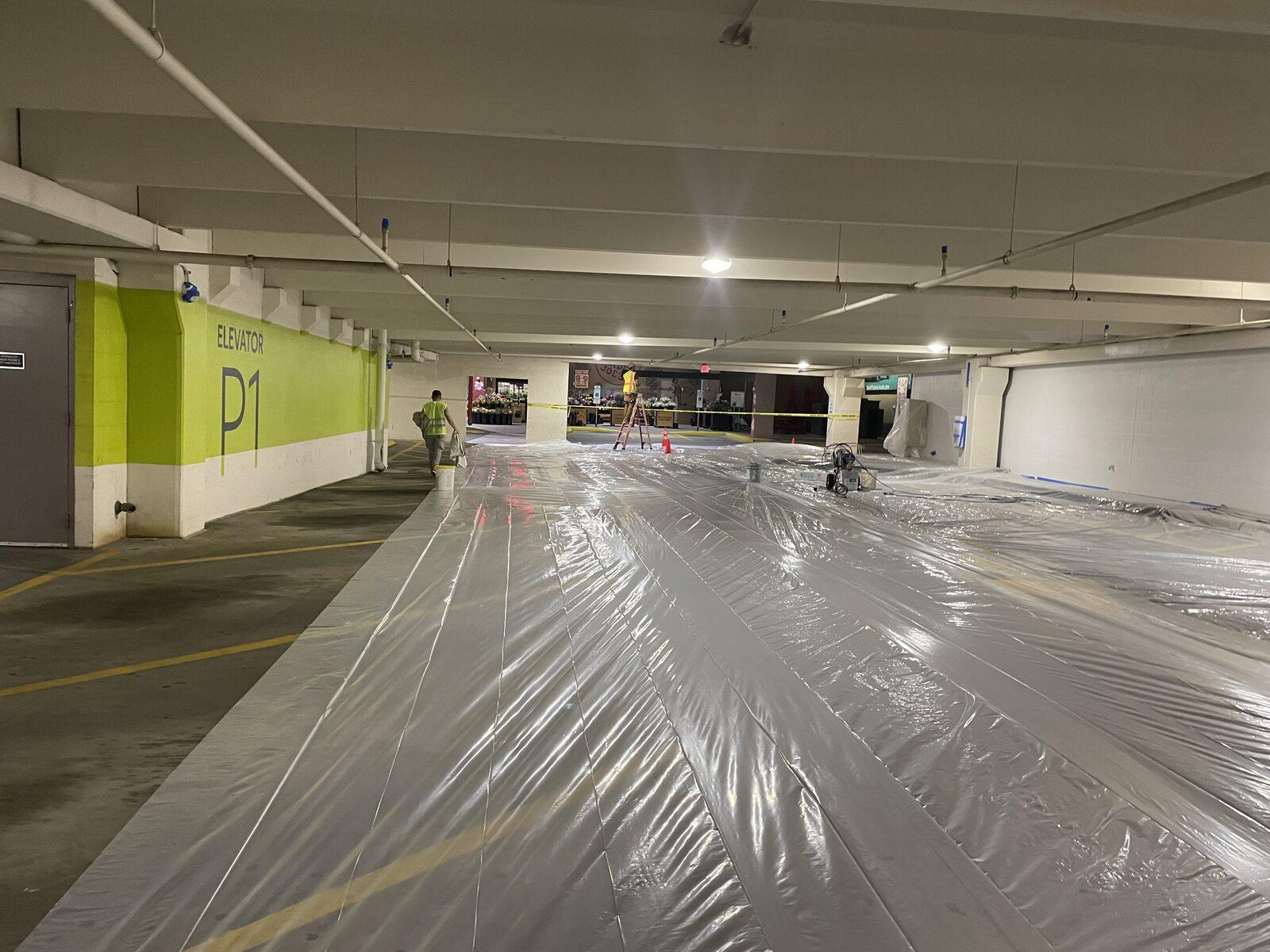
- An office building with a parking deck: acrylic paint in the suites and corridors, and traffic coatings, column paint and striping in the deck.
- A restaurant: decorative finishes in the dining room, and smooth, washable, moisture-resistant finishes in the kitchen.
- A warehouse with a front office: an epoxy floor and safety markings in the warehouse, and standard wall paint in the office.
- A retail plaza: storefront and facade repainting, plus direct-to-metal coatings on canopies, bollards and railings.
In Charlotte, Carolina Sky Painting's own work shows the split. The exterior repaint of the Best Buy and Marshalls retail plaza was commercial work: facade finishes matched around signage and glass. The Metropolitan parking deck recoat was closer to industrial work: a full-deck recoat with containment, done while the garage stayed open. Both are in the project portfolio.
Which contractor to call
Start with the surface that carries the most risk. If the job is tenant space, storefronts or a building exterior, a commercial painting contractor is the right call. If it is mostly tanks, process piping or heavy steel, look for an industrial coatings contractor with blasting equipment and coating inspection experience.
For the common mix, a commercial building with floors, stairwells or a parking structure, ask a commercial painter whether they prepare and coat concrete themselves, and ask to see a finished floor or deck. Carolina Sky Painting takes commercial properties only, and scopes epoxy floors and parking deck striping as a separate system on the same proposal as the commercial painting.